

April 15, 2026
Oracle AI World Tour: The Launch of Fusion Agentic Applications and the Shift to Autonomous Execution
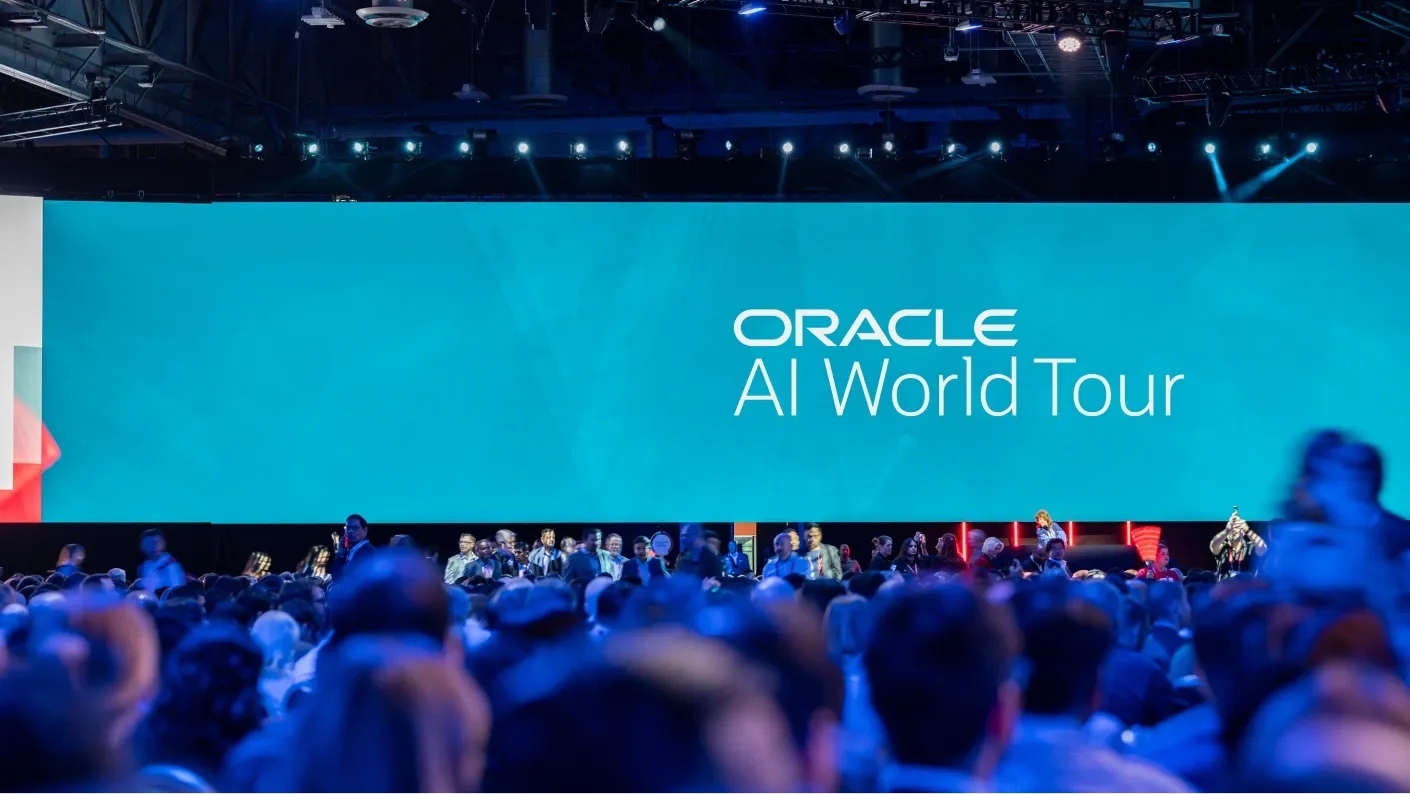
Last week at the AI World Tour in New York, Oracle officially moved the goalposts for enterprise software. The headline of the event was the debut of Fusion Agentic Applications. This represents a pivot from generative AI that simply answers questions to autonomous agents that execute business processes from start to finish.
For organizations following the evolution of cloud technology, this is the most significant update to the Fusion ecosystem in years. It signals the end of the "Copilot" era and the beginning of the "Agentic" era.
From Assistant to Actor
The core of Oracle’s announcement is that AI should no longer be a sidecar experience. Instead of an assistant that drafts an email for a human to send, Fusion Agentic Applications are built to reason, decide, and act.
These applications are embedded directly into the Fusion Cloud. They have the native ability to access unified data, follow existing approval hierarchies, and operate within the security permissions already established for a company’s workforce. This means they can perform complex tasks autonomously while surfacing only the most critical exceptions for human review.
Key Rollouts Across the Fusion Suite
Oracle introduced over twenty specialized agents during the New York event. Each one is designed to solve specific operational gaps that have historically required heavy manual coordination.
- Customer Experience (CX): Five new agentic applications were launched to transform sales and marketing. This includes the Sales Command Center, which monitors pipelines and executes next-best actions to reduce churn. The Cross-Sell Program Workspace was also introduced to turn reactive campaigns into proactive revenue expansion.
- Human Capital Management (HCM): New agents now manage workforce scheduling and talent calibration. They reconcile shift changes against labor policies and suggest performance-based pay adjustments by analyzing real-time data.
- Finance and Supply Chain: The release includes an Autonomous Sourcing Agent. This tool can identify requisitions and invite suppliers to competitive bids for high-volume purchases without human intervention.
The Power of AI Agent Studio
Perhaps the most important news for tech strategists is the release of the Agentic Applications Builder within the Oracle AI Agent Studio. This is a low-code environment that allows businesses to connect and run their own agents using a mix of Oracle-built, partner-built, and custom-made components.
Oracle is also prioritizing transparency with built-in observability and ROI measurement tools. Leaders can now track exactly how much manual work is being offloaded to agents and monitor their performance through a dedicated safety control dashboard.
The Takeaway for The Cloudors
This update changes the conversation about digital transformation. The focus is no longer on how to use AI to work faster. The focus is on which routine, high-frequency processes can be handed over to an autonomous agent entirely.
As we move through 2026, the competitive advantage will go to the firms that successfully integrate these agents into their core operations. Oracle has provided the framework. Now, the work of implementation begins.
Did you enjoy reading this blog? Share it
Empower Your Journey